New Asia Life Monthly Magazine, March 2026 Issue is published! 🎉
This issue features my contribution to the “Journey Around the Globe” column, sharing the daily life and reflections of alumni living abroad. Hope you’ll find a moment to read it 🙏
📖 Digital edition: https://online.fliphtml5.com/xhegu/sgku/#p=21
Leaving Hong Kong to work in Singapore, nearly five years have passed in the blink of an eye. Every time I return to Changi Airport and walk up to the automated immigration gate, two words appear on the screen: “Welcome Home.” Politics aside, let’s keep things light. As a Permanent Resident, this has become my second home. But the word “home” wasn’t always so certain.
In 2019, driven by pessimism about Hong Kong’s future, I decided to leave and venture out. When the offer from a Singapore company arrived, many friends looked at me with quiet understanding. It was a rare and unexpected opportunity, a rational, pragmatic choice. Yet fate always likes to set its tests: I departed just as COVID-19 broke out. On that four-hour flight, the cabin was nearly empty, the silence unsettling.
Upon arrival, I was sent straight to a hotel for fourteen days of mandatory quarantine. Confined to that room, stripped of freedom, I kept asking myself: why did I move to the tropics? Wasn’t it for a better life? Yet with the world locked down and borders sealed, that “better life” felt impossibly abstract. I hadn’t even breathed the city’s air yet, only gazing at this unfamiliar city through a glass window. Those days taught me that leaving is not a romantic adventure, but an act of courage that demands bearing loneliness and uncertainty.
New to the city and knowing no one, I was fortunate to find a few Hong Kong-in-Singapore Facebook groups. The saying “on the road, you rely on friends” rings especially true abroad. Every newcomer’s first priority is hunting for accommodation online. Compared to the subdivided flats I lived in back in Hong Kong, Singapore’s housing was relatively reasonable and spacious, at least some room to breathe. Rent wasn’t cheap, but that sense of space was the first step in settling down. Gradually, I began to find my footing in this city-state.
Friends who’ve visited Singapore as tourists often praise its cleanliness, brightness, and safety. I too wandered through museums and galleries on weekends. The Merlion, the Marina Bay Sands hotel, Sentosa, the casinos, the theme parks, all checkable in two or three days. The longer you live here, the less appeal these manufactured attractions hold. Tickets are steep, and they have little to do with daily life. For residents, these landmarks pale in comparison to the hawker centres tucked inside HDB housing estates.
Living in Singapore, one thing you simply cannot miss is the food. Tourists mostly know Hainanese chicken rice, but go a little deeper and a whole world opens up: wok-fired char kway teow, fried carrot cake, Hokkien mee, and the coconut-rich laksa, each a universe of its own. Fried tofu is a particular gem, crisp outside, tender within, dipped in sweet chilli sauce, endlessly memorable. Most of these treasures hide in hawker centres, always with long queues. When you finally reach the front, the uncle or auntie will fire off a brisk: “Eat? Takeaway?” That clipped vernacular, delivered in a local accent, sounds jarring at first, but in time, it becomes endearing.
You must also learn to order a kopi. The intensely sweet condensed milk paired with a slightly toasted coffee aroma has become my daily ritual for starting work. My most anticipated breakfast: kaya butter toast with two soft-boiled eggs, a splash of soy sauce, and a sip of hot coffee. The small joys of life are really nothing more than this. Finding familiar comfort within an unfamiliar culture, perhaps that is where the settling of body and mind truly begins.
Two festivals in Singapore left a particularly deep impression, both capable of making you feel the warmth of culture, even in a foreign land. At Chinese New Year, yusheng (raw fish salad tossing) is indispensable. The platter is neatly arranged with shredded carrots, crushed peanuts, and colourful garnishes, with fresh fish at its heart. First the dressing of orange juice and syrup, then everyone gathers around the table, chopsticks raised high, tossing and mixing the ingredients while calling out auspicious phrases: “Huat ah! Huat ah!”, “Prosper! Prosper!” The louder the tossing, the greater the fortune. Even as a first-timer, you’re quickly swept up in it, that distinctly Nanyang warmth and festivity.
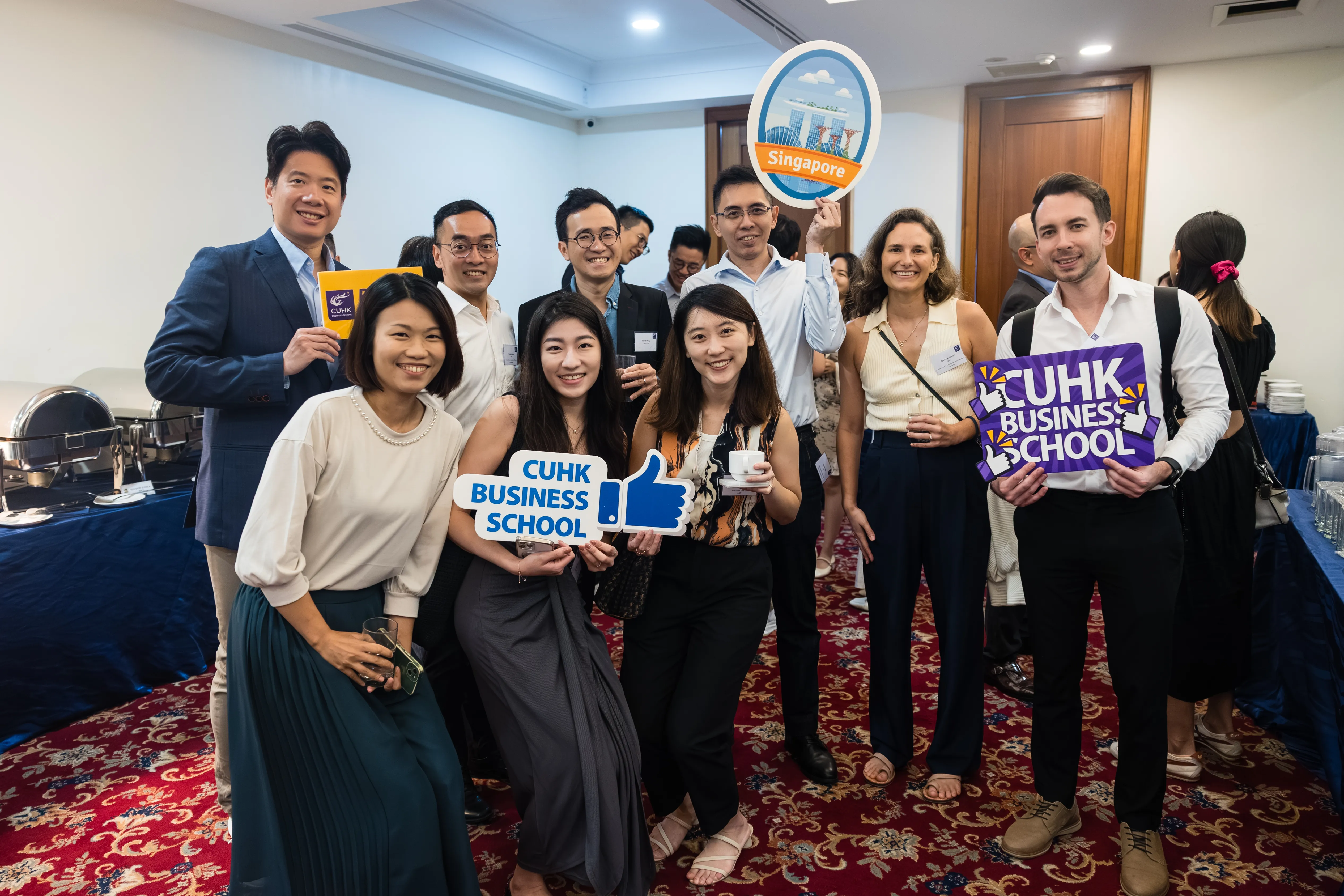
As for Mid-Autumn Festival, the highlight every year is the joint mooncake dinner hosted by the Hong Kong universities’ alumni associations. That is the one night of the year I hear the most Cantonese. I am always struck by how many Chinese University and New Asia College alumni are here, many seniors who put down roots decades ago. Listening to them recount the details of their lives here, sharing the hardships and turning points of their early days, I always feel I’ve gained more than years of schooling could offer. To gather with fellow alumni thousands of miles from home, that kind of connection defies easy description, yet is deeply precious. In that moment, an unfamiliar city acquires a sense of belonging.
Life gradually settled, and I grew accustomed to the heat, returning to Hong Kong in winter, I now find it too cold. Just as I thought I might stay long-term, things took a turn. The British startup I worked for began facing layoff pressure; colleagues around me left one by one, some voluntarily, some not. I started worrying about my own position. In Singapore, your job and your visa are tightly linked, lose one, and everything unravels. Anyone who has spent time here knows that visa renewals and Permanent Residency applications are unavoidable realities, and I was no exception. With so many expats in my social circle, the topic surfaces naturally in almost any gathering. After much deliberation, I decided to apply for PR, and then came the long wait. What that waiting taught me was acceptance of uncertainty.
Meanwhile, despite a satisfying salary, I began reassessing my long-term career direction and sense of purpose. I enrolled in a master’s programme at NUS in my spare time, hoping to sharpen myself against an unpredictable environment. Returning to the classroom offered a different kind of perspective. I observed the ambition and drive of international students, and felt firsthand the fierce competition faced by local students. I made local friends, and through them came to understand the political culture, racial tensions, the pressure on young men from national service, the harsh realities of the job market, and the many contradictions and struggles within Singapore’s digital transformation journey. After years of living here, it becomes harder to pin any single label on what I see and feel. This city has its gleaming, polished face, and corners that are less modern, less orderly, less efficient than the brochure. The positive image and the complex reality coexist; no single phrase can capture it. Only by being immersed in it do you truly understand.
Over these years, the international landscape and geopolitics across Southeast Asia have shifted rapidly. What I did not anticipate was that more and more friends from Hong Kong have also found their way to Singapore, for one reason or another. What does this movement of people signify? How do overseas Hongkongers navigate turbulence? How do they find their footing in a foreign land? How do they carry themselves through an uncertain world? Perhaps these questions have no standard answers. Perhaps what matters more is cultivating clear-eyed awareness, listening more, observing more, thinking more, the most fundamental capacity for facing the world. I recall Singapore’s former Prime Minister Lee Kuan Yew once saying that young Singaporeans should go out, see the world, and only then will they truly understand what kind of place Singapore is. The same wisdom applies to Hong Kong, and to fellow students of New Asia College. Sometimes you really do need to leave, to live somewhere else for a while, and only then, looking back, can you deeply understand what Hong Kong is, and who you truly are.
Five years is enough time for the unfamiliar to become familiar, and for a person to redefine what “home” means. Living abroad is not escape, but expansion; not severance, but extension. It has allowed me to move between different systems and cultures, and in the space between leaving and looking back, to find a more settled sense of self. Now, every time I return to Changi Airport and see those two words, my feelings are nothing like the apprehension of five years ago. Living and moving between two cities, I have come to deeply understand the meaning of that old verse:, wherever the heart finds peace, that is home. Singapore is no longer merely a place I landed. It is the place where a real life was lived.