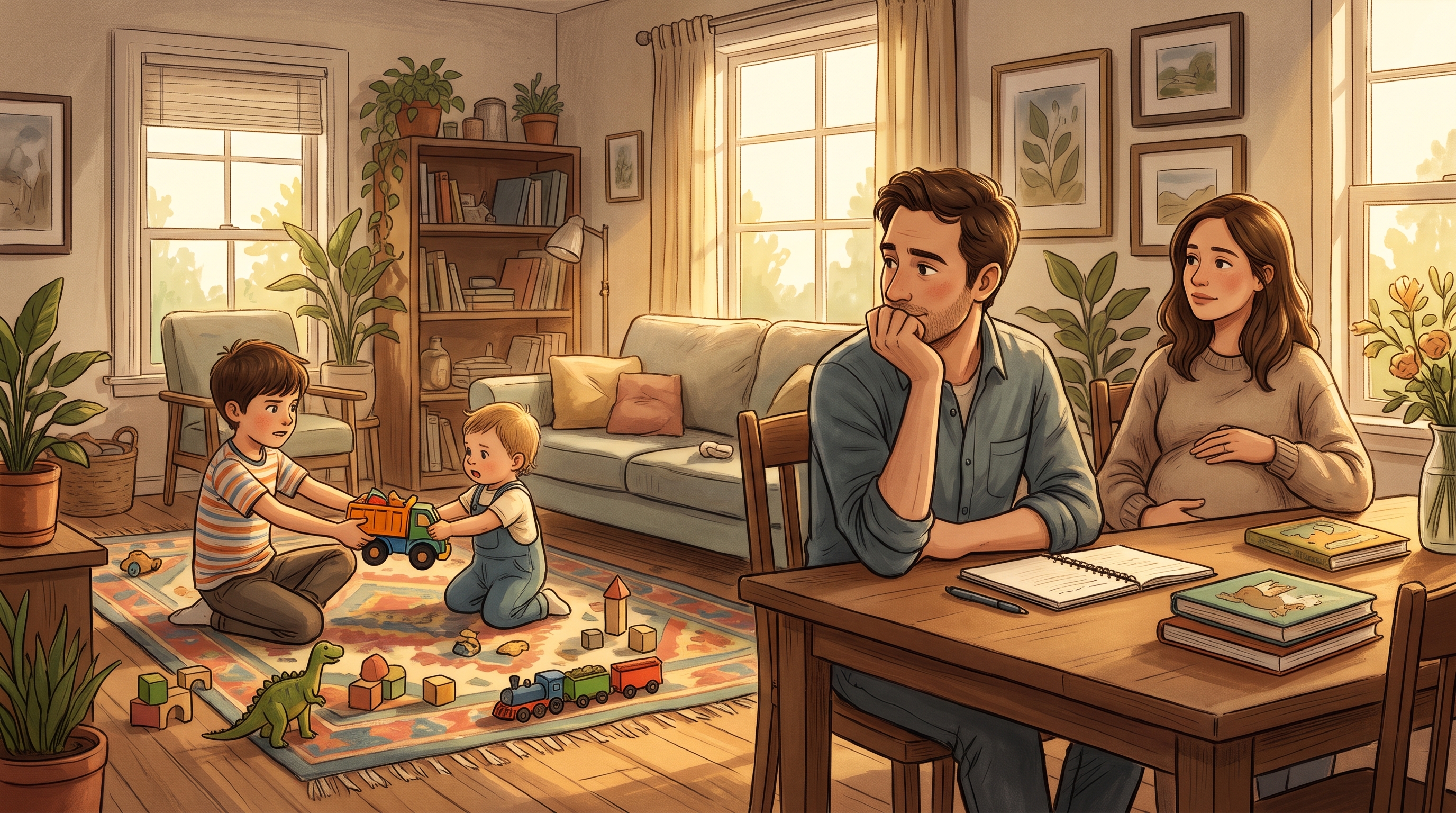
Last night, I watched my two cousins fight over a toy. One is eight years old and the other is three. It is a common scene in almost every home, yet it made me stop and think. What is the right way for adults to handle this? Should we force kids to share their toys? Should we yell and blame them so they listen? Should we use carrots and sticks, using rewards and punishments to train them? Since my daughter will be born next year, I can no longer watch these moments from the side. Watching my cousins pushed me to look at my own mind and read books to find the right answers.
Two books have deeply changed how I think about raising a child. One is by Spanish child brain expert Álvaro Bilbao, who writes about brain science for children from birth to age six. The other is by British therapist Philippa Perry, called The Book You Wish Your Parents Had Read. Together, they explain how a child’s mind works and how a parent’s own feelings shape a child for life.
In many families, adults love praising young kids for being sensible and quiet. Bilbao points out that parents need to be sensible about brain science first. Being sensible is something adults learn from society, not something young children are born with. Expecting a small child to control big feelings and take care of their parents’ moods is like asking a crawling baby to run a marathon.
To show why, Bilbao explains the Triune Brain Theory by scientist Paul MacLean, which divides the brain into three parts. The survival brain is ready at birth and takes care of basic needs like breathing and heartbeat. The emotional brain grows very fast from birth to age six and handles feelings, memory, and love. The logical brain, which controls planning, self-control, and understanding how others feel, does not fully finish growing until around age twenty-five. Trying to lecture a three-year-old into staying calm is like trying to run a modern 3D video game on a thirty-year-old computer. The system simply cannot handle it and will crash.
Bilbao also talks about a child’s pyramid of needs. A child’s brain must grow from the bottom up. First, a child needs food, sleep, safety, love, and respect. Only when these emotional needs are met can they reach the top of the pyramid, where real learning, curiosity, and creativity happen. A sad real-life example is Zhang Xinyang, once famous in China as a child genius who entered university at age ten and started a PhD at sixteen. His father took away his friends and playtime so he would only memorize books. Because his basic emotional needs were ignored, he grew up hating his parents, lost all love for learning, and stayed like a young child in his emotions. When we skip emotional care, everything built on top falls apart.
This brain science quickly answered my questions about my cousins’ toy fight. First, adults should not force young kids to share. Real sharing requires understanding how others feel and having a sense of time, knowing that a lent toy will come back later. A two- or three-year-old is only just learning what it means to own something. If a parent grabs a toy away just to look polite in front of others, the child feels betrayed by the person they trust most, and their sense of safety drops. A better way is to respect the younger child’s turn and kindly tell the older child to wait until the toy is free.
Second, yelling or lecturing does not work when a child is upset. When a child cries because their blocks fell down, or feels jealous when a new baby arrives, the alarm center in their brain goes off and stress floods their body. Scolding them or asking what there is to cry about only adds fuel to the fire. Using rewards and punishments might force them to obey for a minute, but it does not help them grow. Bilbao’s rule is to handle the emotion first and talk about logic later. Give them a hug, show that you understand their feelings, and wait until they calm down before guiding them on what to do next.
While Bilbao taught me about a child’s brain, Philippa Perry made me look closely at my own mind. Many old ideas warn parents not to pick up a crying baby right away, saying it will spoil them or stop them from becoming independent. Perry explains that this is wrong. For a baby who cannot talk yet, crying is their only way to ask for help and survive. Leaving a baby to cry alone can harm their growing brain and teach them to go numb.
How parents respond to those early cries shapes how a child sees the world and builds relationships as an adult. When parents comfort a crying baby every time, the child builds secure attachment and believes the world is safe and they deserve love. When parents are warm sometimes and cold other times, the child becomes anxious, learns to cry louder for attention, and grows up afraid of being left alone. When parents stay cold and ignore the cries, the child learns to avoid closeness and run away from problems later in life. When parents yell at or hit a crying child, the child learns to see other people as a source of pain and struggles to care about others.
Perry also shows that our reactions to our children often come from our own childhood. If we are not careful, we pass our old hurt down to the next generation. She tells the story of a mother who was a trained therapist, yet she kept getting angry whenever her young daughter asked for help at the playground. When she stopped to reflect, she realized her anger was not about her daughter at all. Her own mother had never let her take risks or be independent as a child, so seeing her daughter ask for help brought back old anger toward her own mother. This story taught me that I must know my own past triggers so I do not put my old pain onto my daughter.
Another important lesson from Perry is that the mood at home matters much more than the shape of the family. Whether a child grows up with two parents, a single parent, or a blended family, what truly decides their happiness is how well the adults get along. Studies show that seventy percent of young people feel that fighting at home deeply affects their growth, while only thirty percent of parents notice this. Even when kids look busy playing video games or doing homework, parents arguing still hurts their sense of safety. Even if parents separate, they should never speak badly about the other parent in front of the child, because children know they are part of both parents and feel hurt inside when either one is put down.
Finally, Perry warns us not to distract kids away from their sad or scared feelings. When a child says they are scared of shadows or do not want to go to school, many parents try to argue with them, scold them, or buy them a gift to make them forget. Perry shares the heartbreaking story of Lucas, a ten-year-old boy from a family that looked happy from the outside. One day, he tried to jump from a window when his parents were not looking. Only later did they learn why. His busy parents often complained in front of him about how much trouble it was to find someone to watch him. Whenever Lucas felt sad, they bought him gifts instead of talking about his feelings, leaving him feeling lonely and unwanted. As parents, we do not need to be magicians who fix every bad mood right away. We just need to sit with our child, accept how they feel, and say something simple like, it seems like you really do not want to go to school today, can you tell me what happened? Being truly present lets them know they are not alone.
Writing all of this down on a quiet evening is easy, because the ideas make complete sense on paper. The real test will come next year when my daughter is born, during tired nights, loud cries, and stressful moments in front of relatives. I wrote this post as a reminder to my future self. I want to be patient with her growing brain, care for her feelings before giving lectures, check my own emotions before reacting, and keep our home warm and peaceful. Reading theory is only the first step. When my daughter arrives, I am ready to bring it into daily practice.